
About Me
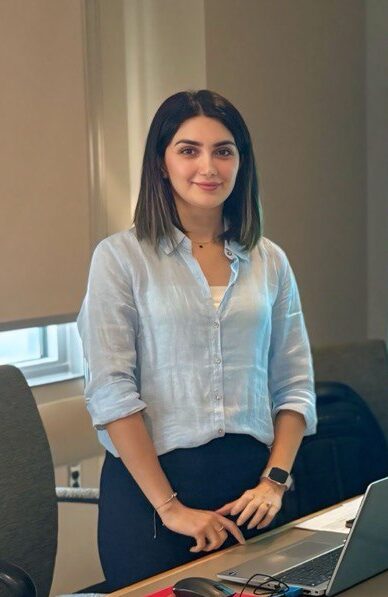
Hi, I am Mahya
I’m a Ph.D. student in Human-Computer Interaction (HCI) at Indiana University, Indianapolis, under the supervision of Dr. Francesco Cafaro, researching how immersive technologies impact user experiences in health and learning. I design human-centered solutions that enhance accessibility, engagement, and cognitive support.
With a background in Computer Science and Entrepreneurship, I explore how emerging technologies shape human interactions. My research combines UX research, qualitative and quantitative methods, and interactive system design.
Currently, I focus on Virtual Reality (VR) and ADHD, studying how immersive environments influence attention, engagement, and cognitive load. Through usability testing and behavioral analysis, I aim to develop XR interventions that foster well-being and inclusivity.
Education Journey
Ph.D. in Human-Computer Interaction
Indiana University, Indianapolis (2023–Present)
M.S. in Entrepreneurship
University of Tehran (2014–2017)
B.S. in Computer Science
Kharazmi University (2009–2014)
Research Interests
Human-Computer Interaction (HCI)
Immersive Technologies (AR/VR/XR)
Accessibility & Inclusive Design
Technology for Neurodiverse Populations (e.g., ADHD)
Health & Wellness Technology
Usability Testing & Evaluation
User-Centered & Participatory Design
Tangible & Conversational Interfaces
Publications
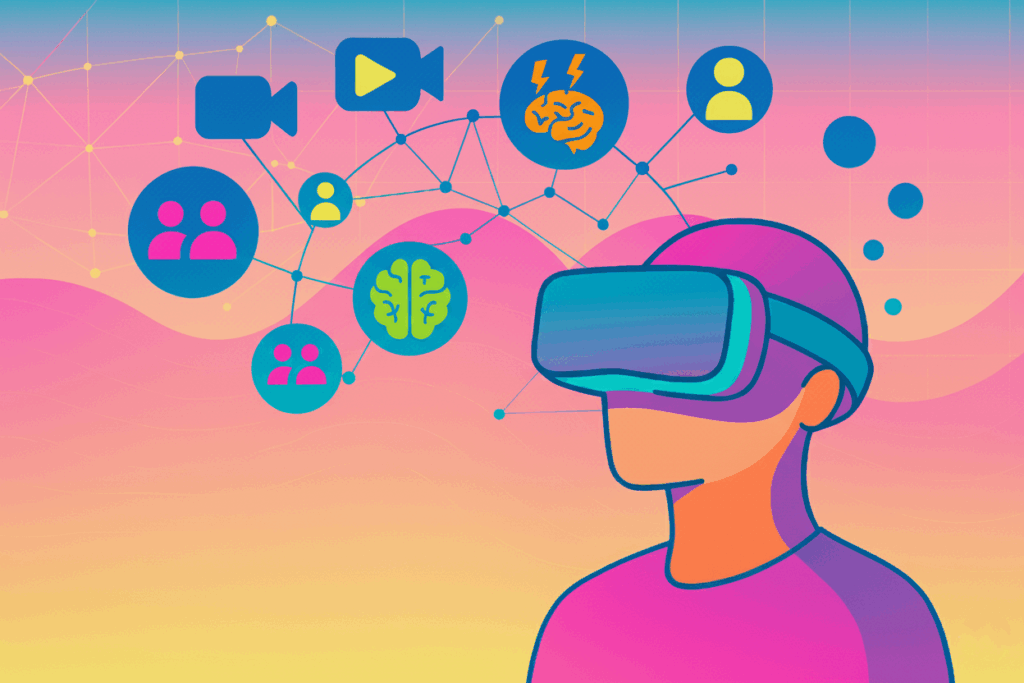
“A Double-Edged Sword”: Practitioners’ Perspectives on Social VR for ADHD
Mahya Tazike, Elmira Deldari, Adina Friedman, Francesco Cafaro
Social Virtual Reality (VR) is emerging as a promising technology for individuals with Attention-Deficit/Hyperactivity Disorder (ADHD). However, we still need to explore how practitioners perceive and envision its integration into their clinical practice. This study presents findings from semi-structured interviews with six practitioners (clinicians, therapists, and clinical professors) experienced in ADHD and VR interventions. Our findings reveal practitioners see significant therapeutic potential in social VR for supporting cognitive skills, impulse control, and creating emotionally safe environments. However, they also highlight challenges, including difficulties with social communication in VR, ensuring skill transfer to real-life, and managing overstimulation.
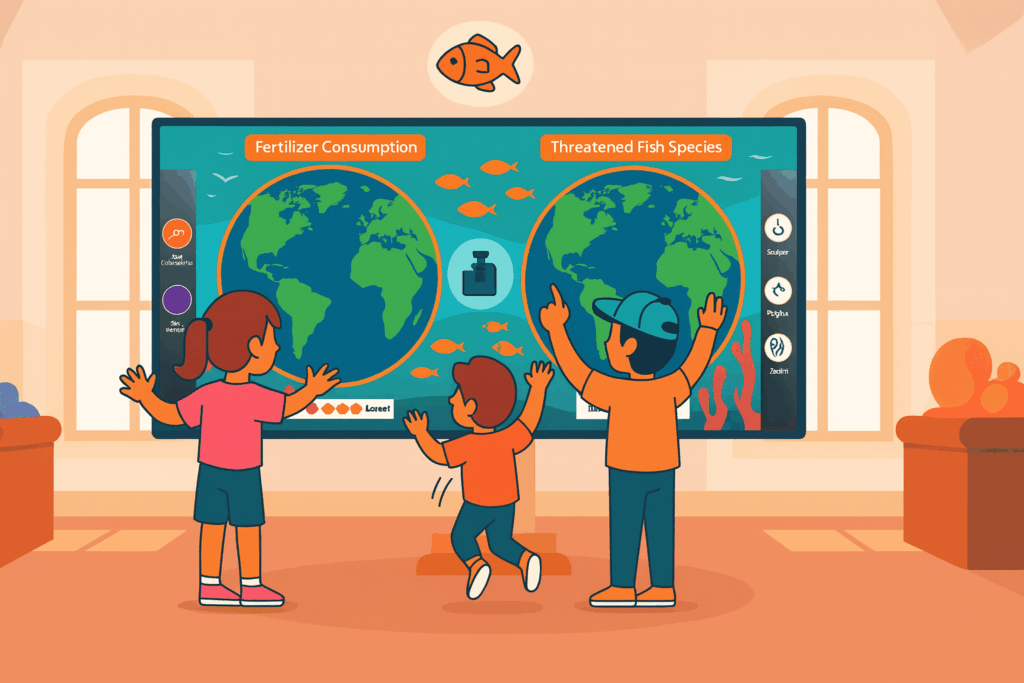
“Puppeteers and Forecasters”: How Children Engage with Human-Data Interactions in Museums
Adina Friedman, Mahya Tazike, Esen Gokpinar Shelton, Nachiketa Patel, A’aeshah Alhakamy, Francesco Cafaro
Human-Data Interaction (HDI) installations offer engaging ways for children to explore data, yet little is known about how children interact with and around HDI screens. We deployed an HDI display in a museum with K–12 school groups. Our qualitative analysis of children’s interactions revealed rich social behaviors, from direct peer instructions (like one child “puppeteering” another’s arms to teach a gesture) to imaginative role-playing (such as acting as “weather forecasters” using the data visualization). While children collaborated to explore the data, they also competed for control and struggled with non-intuitive gestures. We present design recommendations to support children’s exploration of interactive data visualizations.
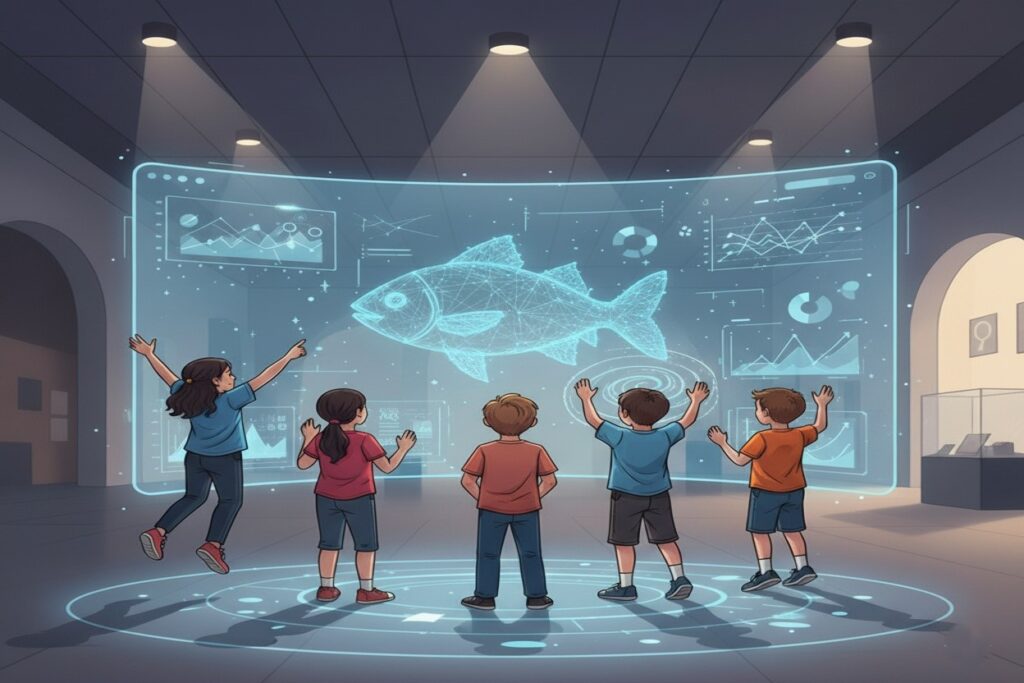
“”I’m a Fish!”: Exploring Children’s Engagement with Human-Data Interactions in Museums
(Applied Sciences) [PDF] [DOI]
Adina Friedman, Mahya Tazike, Esen Gokpinar Shelton, Nachiketa Patel, A’aeshah Alhakamy, Francesco Cafaro
In an increasingly data-driven world, sparking children’s curiosity for meaningful data exploration lays a foundation for lifelong data literacy. Human-Data Interaction (HDI) offers a promising way to make data accessible and engaging, especially in informal settings like museums. This paper reports findings from a field study of a gesture-controlled HDI installation in a large urban museum. We analyzed interactions of over 200 K–12 children as they engaged with the prototype, the data, and each other. Our analysis shows that children’s engagement was deeply social, playful, and imaginative, often emphasizing collaborative discovery and role-playing over direct data interpretation. We conclude with design recommendations for HDI installations that build on these behaviors to promote more engaging and meaningful data exploration.
Mentor & Collaborator Testimonials
Feedback from professors, mentors, and collaborators on working with me.

Mahya brings thoughtful insights and a strong work ethic to our research team. Her ability to lead user studies and synthesize findings into meaningful design recommendations has been a great asset to our projects.

Mahya contributed meaningfully to our research on a health tool for older adults. She supported usability testing and paper writing with focus and clarity. Her collaboration and attention to detail were strong assets to the team.

Working with Mahya in the XR Lab was a valuable experience. She led our research with clarity, encouraged collaboration, and supported our growth throughout the project.